Guides
Chipping In for a Coworker’s or Teacher’s Gift: How to Collect the Money Without Chasing Anyone
Read in other languages: Русский·Українська·Беларуская·हिन्दी·Español·Bahasa Indonesia·简体中文·Bahasa Melayu·தமிழ்
To collect money for a group gift without chasing anyone, start a separate chat without the person you’re celebrating, divide the budget by the number of people chipping in, round up, and keep track of who has paid. Below is the math on one example, three messages you can copy, and what to do about the person who pays on the last day.
Friday is Linda’s 50th, and the team chat has 14 people in it
On Monday Jess posts in the team’s group chat: “Linda turns 50 on Friday, let’s all chip in!” Twelve people like the message. Linda, who is also in that chat, likes it last.
By Wednesday Jess has bought the gift on her own card and has payments from six people. Three more have asked “what’s your Venmo?”, even though it’s pinned. Two haven’t said a word. One person sent $25, another $30, and by now nobody can tell who still owes what.
Start with a separate chat
Rule one of any collection: the person you’re celebrating sees neither the collection nor the amounts. Create a chat called “Linda’s gift” and invite only the people chipping in. The surprise survives, and the gift talk doesn’t drown in work messages.
The second upside is that everyone can see who’s in. Join the chat and you’re chipping in. If you’d rather not, you simply don’t join, and nobody has to say no out loud.
The amount: the budget divided by the people paying
The team has 14 people. Linda isn’t paying, so 13 chip in. They pick a $330 spa gift card.
$330 ÷ 13 = $25.38. Nobody is going to send that, so round up to the dollar: $26. That leaves $8 extra, and it should go on something specific from the start. Jess kept it simpler. She added flowers for $34, and the total divides evenly: $364 ÷ 13 = $28 each.
How much to spend in the first place is each team’s call, and there is no solid US figure for what people usually give. The pressure is better documented. In a Harris Poll survey for Express Employment Professionals (June 2025, 1,000 US adults), 46% said they feel pressured to spend a specific amount on gifts, and 71% said that pressure hits lower earners hardest. A collection with a clear, modest number and a quiet way out gets a lot less eye-rolling.
Three messages you can copy
The ask
A Venmo handle, or the email or mobile number you use for Zelle, is easier than bank details. Venmo charges nothing to send money from a bank account, a debit card or a Venmo balance. Paying with a credit card costs the sender 3%. Ask people to send it as a personal payment: if the sender marks it as goods and services, the person receiving it pays a 2.99% fee. Zelle says consumers typically pay no fees and suggests checking with your bank.
The reminder
A reminder with no names doesn’t single anyone out. Only write privately to people who didn’t react to this one.
The wrap-up
A photo of the receipt answers questions before anyone asks them.
Late payers and the leftover
There is always someone who hears about the collection on Thursday. If they want in, you have two fair options. Their money can go on something extra, say a cake. Or you recalculate for 14 people. That makes it $26 each, and the twelve who already sent $28 get $2 back apiece. Most teams go with the cake, and that’s fine.
For the leftover there is one rule: name it in the first message. A card, a cake, flowers, or “we’ll send it back”. A leftover nobody agreed on turns into “so where did the money go?” a month later.
Gifts for teachers: check the rules first
Public school teachers in the US are public employees, so a gift from families can fall under state ethics law and district policy. Massachusetts spells it out clearly. Its State Ethics Commission says a public employee may not accept a gift worth $50 or more that is given because of the job. For classes there is an exemption. A teacher may accept a class gift, or several over the school year, worth up to $150 in total, if it is identified only as coming from the class and the teacher isn’t told who gave or how much. Once a teacher accepts a class gift, they can’t knowingly accept another gift from any parent who chipped in.
That changes how you run the collection. Say 20 families send $10 each. That’s $200, which is $50 over the line. Put $150 on the teacher’s gift card and spend the rest on the classroom: the rule covers gifts to employees, and gifts to a school or a particular classroom aren’t capped. Sign the card “from Room 12”, with no list of names or amounts.
Other states and many districts write their own rules, and private schools set their own policies. Ask the school office what’s allowed before the first dollar comes in. For a coworker’s gift at a private company, the thing to check is your employer’s own gift policy, if it has one.
Running the collection in Telegram
The “Linda’s gift” chat is also the easiest place to run the money. SplitFast lets you split expenses in Telegram right in the group: add the bot, and the chat’s members show up in the app on their own.
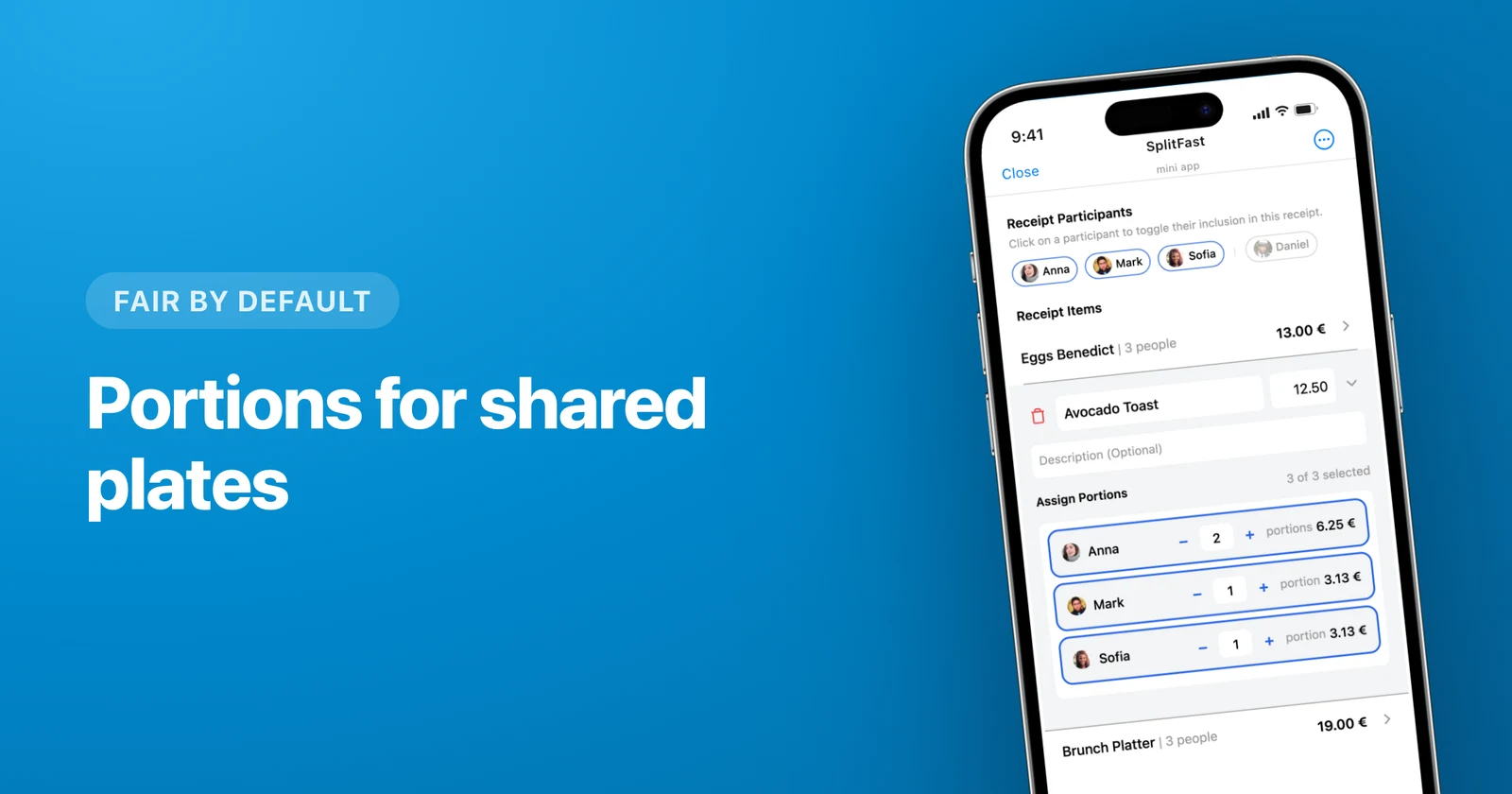
- Jess logs an expense, “Linda’s gift”, $364, paid by her and split equally among all 13, herself included.
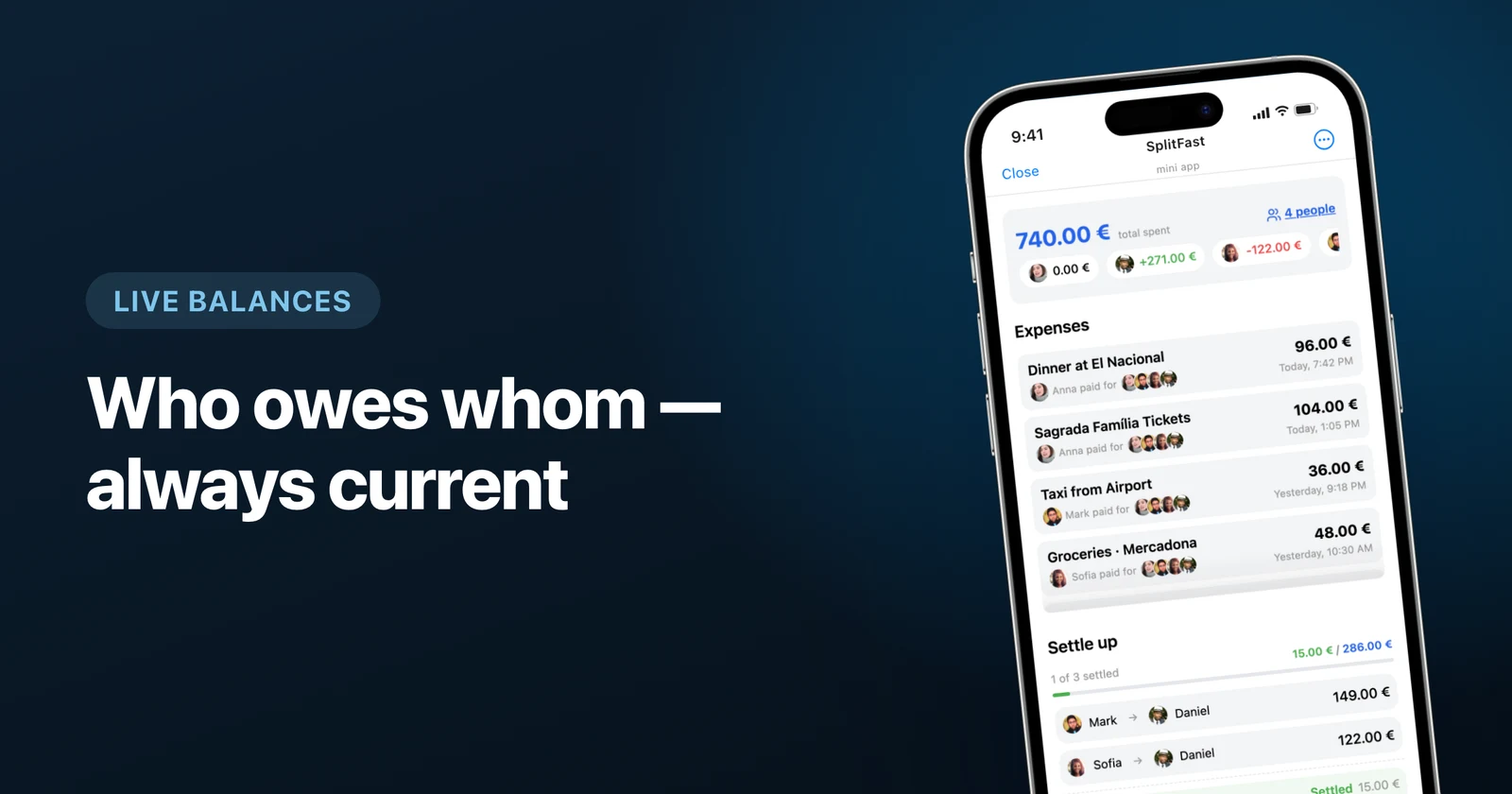
- Balances show it straight away: twelve people owe Jess $28 each.
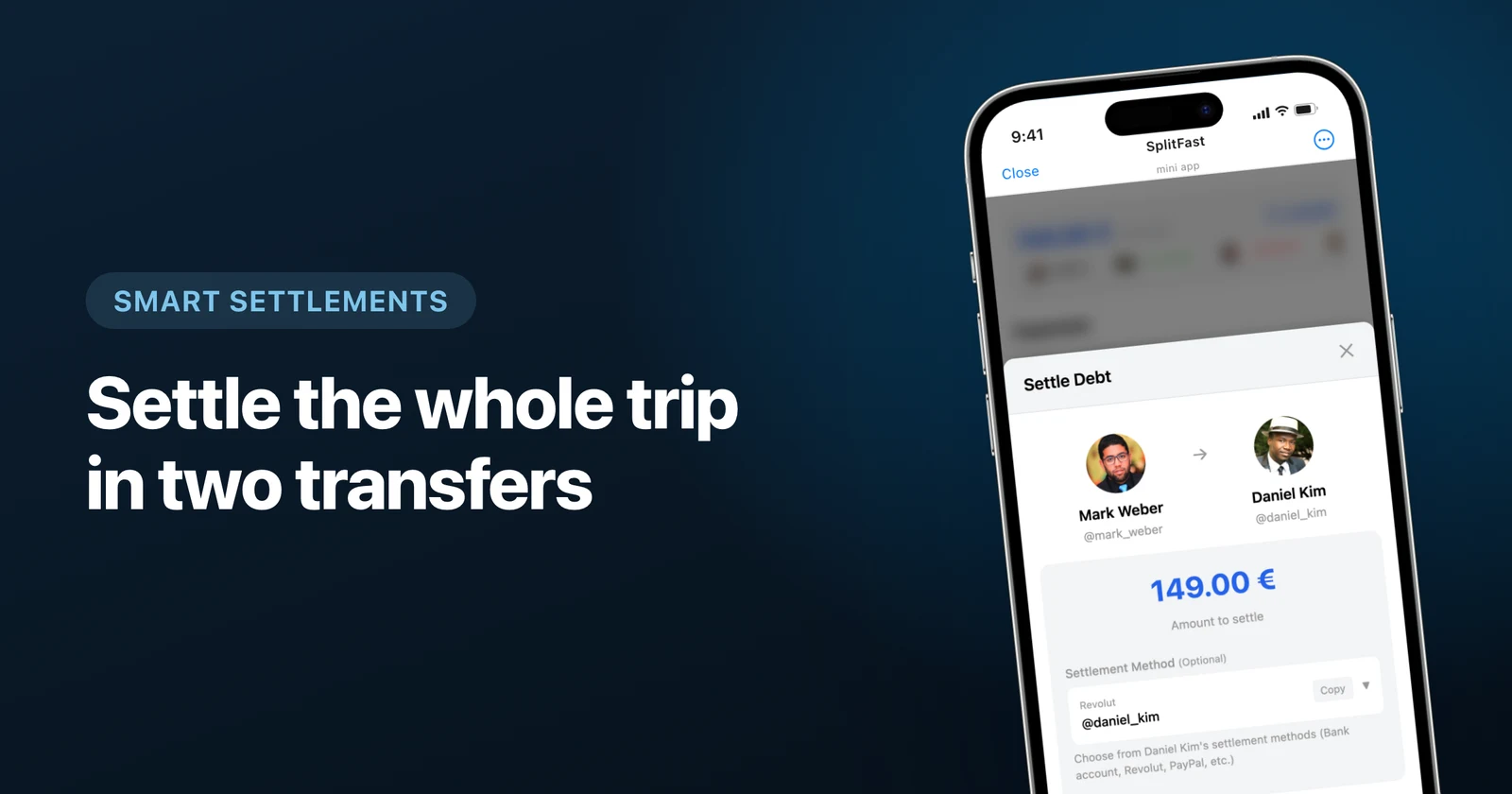
- When a payment arrives, Jess taps “Mark as Settled” on that person’s debt. The list of people who still owe shrinks as the week goes on.
- For anyone who forgot, Jess taps “Remind”, and the bot posts a polite reminder with the amount in the chat. She can send another one for the same debt after 24 hours.
If a fourteenth person joins later, add them to the expense and the shares recalculate to $26. Balances then pick up the $2 owed back to everyone who already paid. The guide to settling group debts explains how the app works out debts like these.
And if it’s Secret Santa
Secret Santa works differently. Everyone buys a gift for one person with their own money, so there is nothing to split, and a White Elephant swap is the same. Shared money only shows up when the group pays for the party together: pizza, a bar tab, decorations for the office. That’s an ordinary shared expense, and you can track it exactly like a gift collection.
Sources
- Gifts to public school teachers and the class gift exemption: Massachusetts State Ethics Commission, Mass.gov
- Pressure to spend on gifts at work: Express Employment Professionals and The Harris Poll, December 10, 2025
- Venmo fees for personal and goods-and-services payments: Venmo, Fees with your Venmo Account
- What you need to send money with Zelle, and fees: Zelle, FAQ
All links checked November 13, 2026. This article is not legal advice.
Frequently asked questions
How much should everyone chip in for a coworker’s gift?
There is no national norm, so start from the gift: divide the budget by the number of people chipping in and round up to the dollar. What people do report is pressure. In a 2025 Harris Poll survey for Express Employment Professionals, 46% of US adults said they feel pressured to spend a specific amount on gifts. One clear, modest amount and an easy way to opt out take a lot of that pressure off.
How do I remind people about the money without offending anyone?
Remind everyone at once and name nobody: “five people still to go, we’re buying the gift Wednesday.” Message someone privately only if they ignored that too, and include the amount and your Venmo handle. If the collection runs in SplitFast, the bot posts the reminder with the amount, and it reads the same for everyone.
Can parents chip in for a gift for their kid’s teacher?
Usually, but check the rules first, because public school teachers are public employees. In Massachusetts, for example, the State Ethics Commission allows a class gift worth up to $150 in total over a school year, as long as it comes from “the class” and the teacher isn’t told who gave or how much. Individual gifts there must be worth less than $50. Other states, districts and private schools set their own rules, so ask the school office before you collect.
What do we do with leftover money?
Decide before you collect and put it in the very first message: the leftover goes on a card, flowers or a cake. Nobody wants 62 cents sent back. A month later, though, somebody will ask where the money went.